
Maenken Systems
Applications
Price Display and System Monitoring
Formats Tools Used
 Delphi
Challenges
Maenken Systems developed a special flagship project in collaboration with Delphi on behalf of a client and has managed it for over 15 years. The client, a manufacturer of outdoor displays for gas stations, commissioned the IT service provider to make its price displays internet-enabled and smart. The goal was to upgrade the displays technologically to enable both maintenance and real-time monitoring of the devices, as well as to significantly improve error detection.
Results
Maenken Systems impressively demonstrates how continuous innovation and the use of Delphi over decades provide investment security and lead to sustainable success. With customized solutions ranging from hardware to the cloud, the company has not only revolutionized price displays at gas stations but also proven that Delphi is a powerful and future-proof technology for complex, international projects.
Bright Displays Ahead!
Delphi Illuminates Fuel Stations Worldwide
The Company
Maenken Systems, an IT company based in Wuppertal, Germany, uses Delphi 13 to develop custom and tailored hardware and software solutions for clients and for its own projects. Founded as a one-man operation by Björn Mänken, the company has been successfully operating in the market with Delphi for over 30 years and, with a staff of more than 25, boasts international expertise in hardware and software projects.
The Challenge
Maenken Systems developed a special flagship project in collaboration with Delphi on behalf of a client and has managed it for over 15 years. The client, a manufacturer of outdoor displays for gas stations, commissioned the IT service provider to make its price displays internet-enabled and smart. The goal was to upgrade the displays technologically to enable both maintenance and real-time monitoring of the devices, as well as to significantly improve error detection.
Most people are probably familiar with the various types of illuminated towers in their own neighborhoods, as the manufacturer works with major fuel companies around the world.

For gas station operators, the fuel price display is the face of the brand and the station’s main selling point. As a critical factor, it plays a decisive role in whether customers stop or drive on and thus has a significant impact on daily sales and brand perception.
The Hardware
From manual signs and the charm of flap displays to the brilliance of digital LEDs
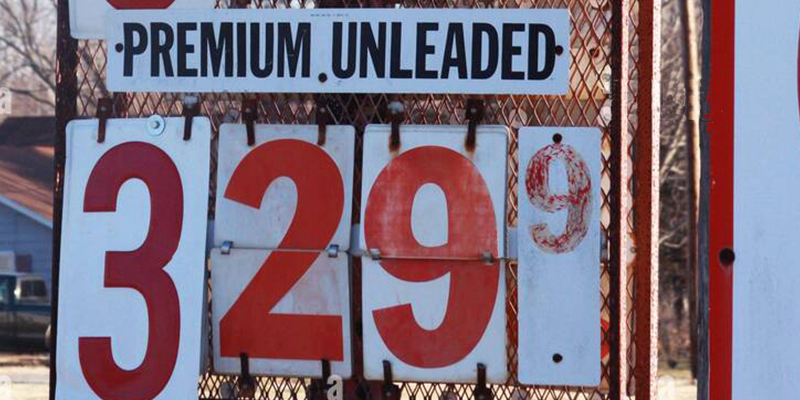
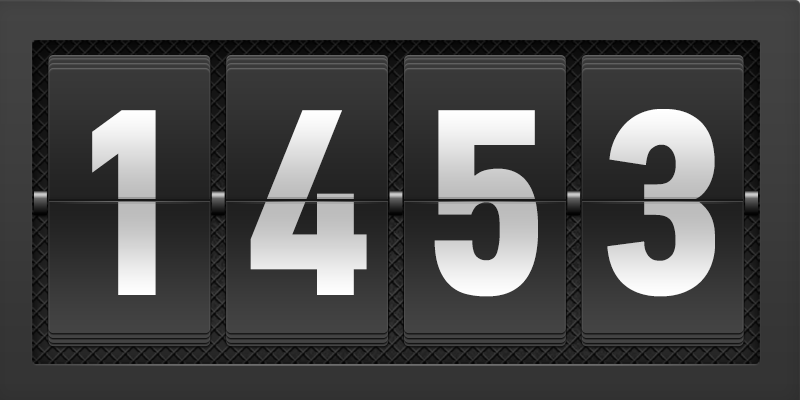
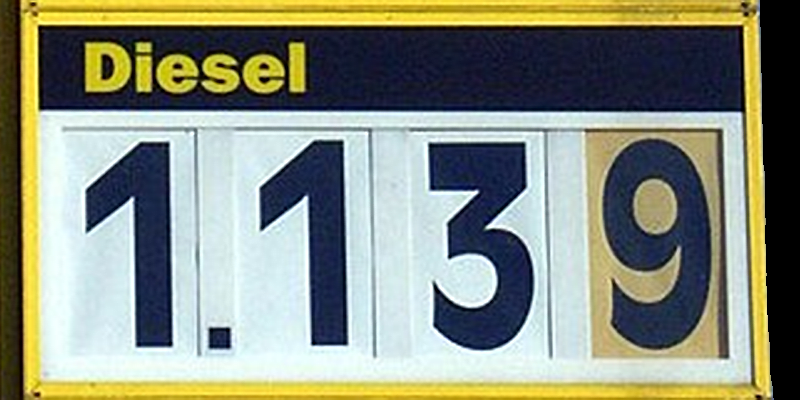
Over the past few decades, display technologies at gas stations have evolved significantly. Where once there was a solitary neon sign for the operator along the road, today brand names and all fuel prices are prominently displayed. The technology behind price displays has also undergone a rapid transformation, from manually hanging numbers to relay-controlled flap displays, scrolling tape displays with printed numbers, and various types of seven-segment displays. A niche product at present is a new system based on e-paper technology. However, due to constant UV radiation, this highly energy-efficient technology has not yet achieved the desired durability.
Manual signs
Drop Display
Scrolling text display
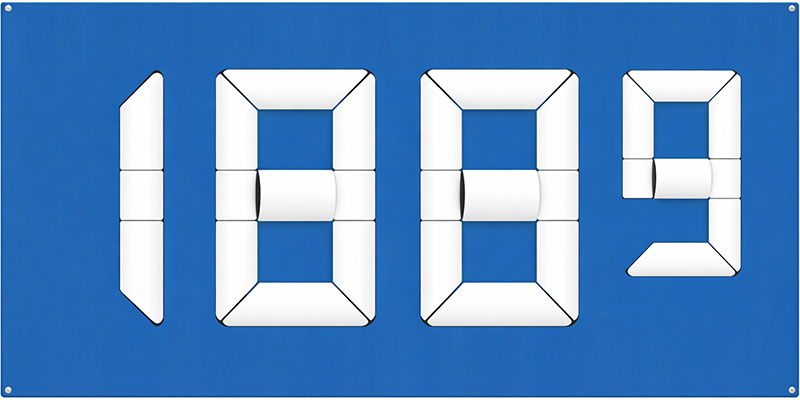
Mechanical 7-segment display
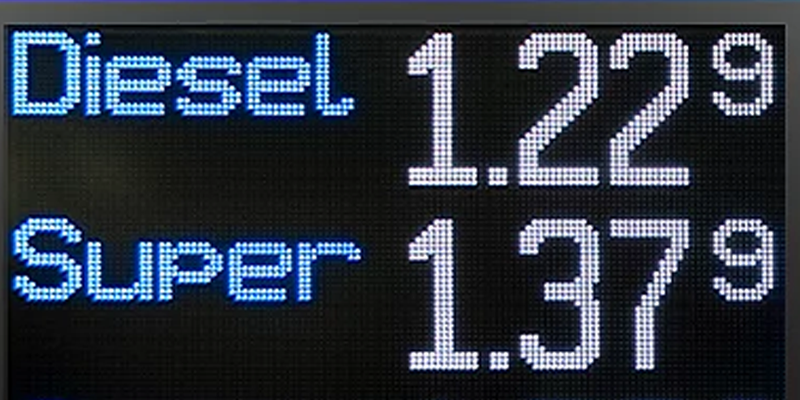
LED displays
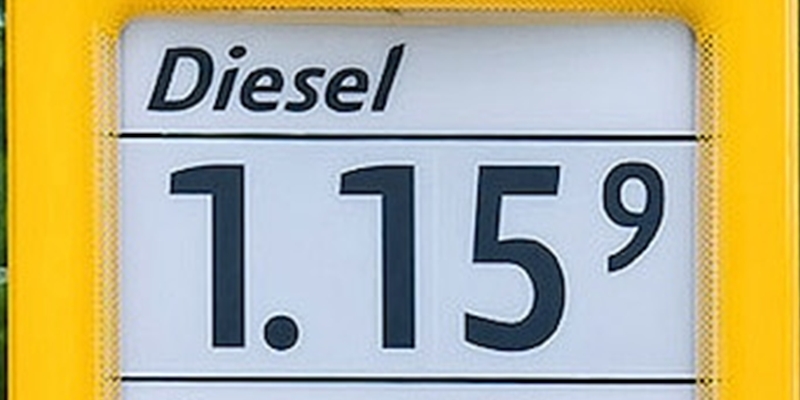
e-Paper display
LED Displays
Modern LED displays, with digit sizes ranging from 25 cm to several meters in height on massive towers, are the most common systems in use today. Given this scale, a single price display can quickly require several thousand LEDs.
Maenken Systems first develops prototypes of the system for its client, including control electronics; selects suitable processors as well as a simple, cost-effective ARM 5-based embedded Linux system; and uses an RS-485 bus system for communication.
The system communicates via interfaces with other systems at the gas station, such as the cash register, to display prices on the price displays.
The rest is in the cloud.
Remote monitoring of the systems via the cloud enables an early, customer-oriented response to existing or impending malfunctions.
In our cloud systems, we have replaced most scripts with compiled Delphi programs; this has resulted in significantly faster execution speeds and enhanced security, thereby reducing operating costs.
Björn Mänken, Owner, Maenken Systems
The Software
Smart Screens with Delphi
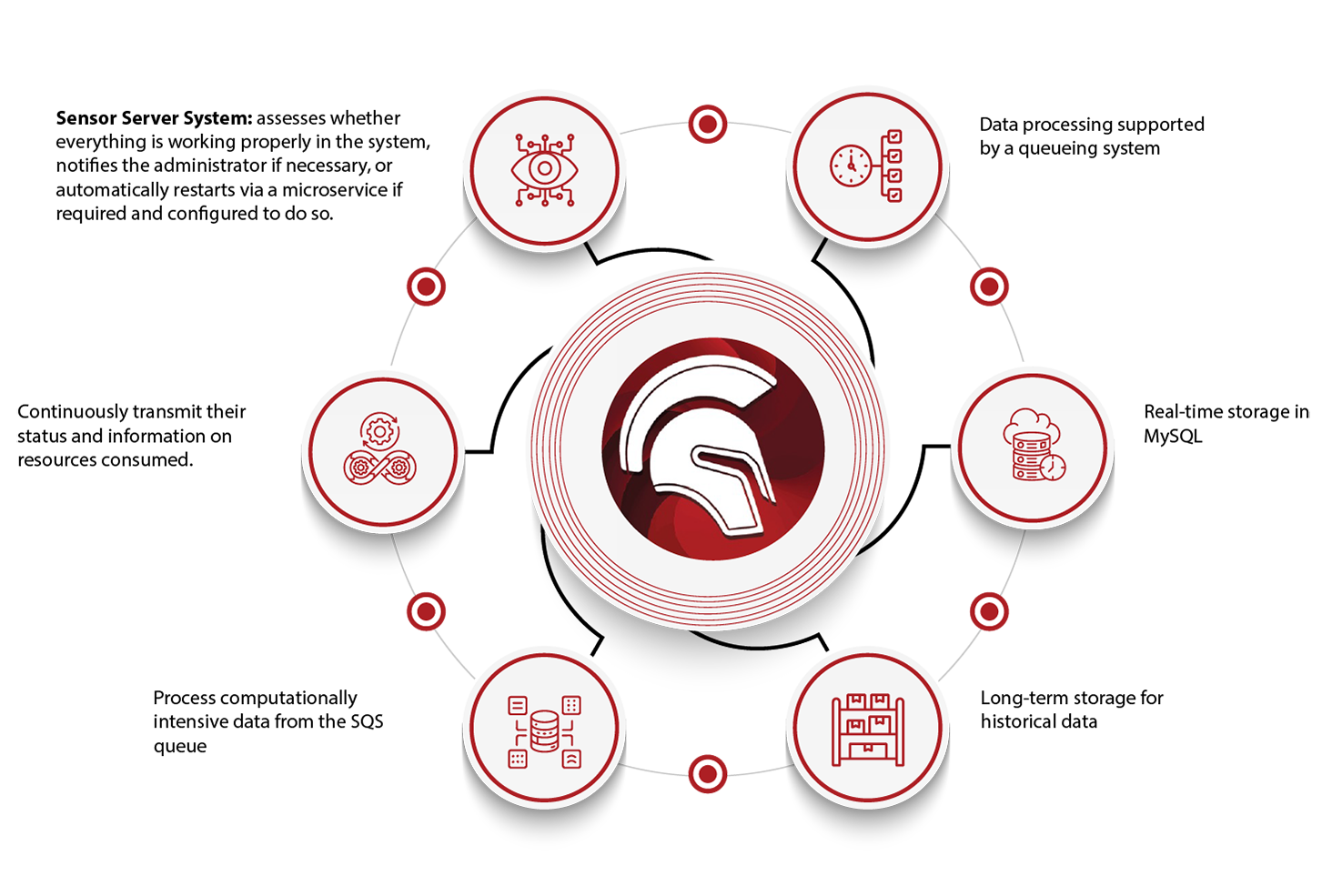
Most of the software infrastructure used to manage the systems globally does not run on-site at the gas stations themselves but is hosted in the cloud. This architecture ensures reliable, low-maintenance operation with extensive analytical capabilities.
The backend in the cloud is now being developed using Delphi. At the start of development, many modules were still written in PHP. For financial reasons, the developers decided to take a radical step, thereby reducing computing power by over 20% and, consequently, immediately lowering operating costs. In the process, interpreted scripts were replaced by Delphi services running in Docker containers. As a result, functionality, reliability, and maintainability have all improved significantly.
Building on this experience, many scripts for the APIs in the Linux-based embedded systems at gas stations were also replaced with compiled Pascal programs, leading to higher performance and a longer operational lifespan for these devices.
The developers strive to keep the source code as identical as possible across both the PC-based system and the embedded systems, and to support the different systems through conditional compilation. After development, the Pascal program code for the embedded ARM systems, as well as the Delphi services, is automatically transferred via the company’s own Git servers to the Linux ARM or Delphi compiler using a Jenkins integration to seamlessly integrate these systems. This ensures reproducible documentation and high quality of the resulting software.
ker containers are used in this globally distributed application architecture. TMS components such as XData and Sparkle are utilized, along with databases such as Influx, MySQL, and MongoDB. In particular, the monitoring data from the LED price displays generates immense amounts of data. Data is archived at specified intervals and is then primarily used for future shelf-life forecasts of the modules.
Conclusion
Maenken Systems impressively demonstrates how continuous innovation and the use of Delphi over decades provide investment security and lead to sustainable success. With customized solutions ranging from hardware to the cloud, the company has not only revolutionized price displays at gas stations but also proven that Delphi is a powerful and future-proof technology for complex, international projects.
The transition to Delphi 13 went smoothly and has brought numerous benefits. Maenken Systems is currently working on the third generation of the application, featuring a modernized technical approach and the integration of AI.
Of course, in the future, electric mobility and charging station equipment will open up a new field where, for example, electricity prices can be displayed clearly from a distance.
For more information about Maenken Systems and its other projects, visit https://maenken.systems/